

Kunstmuseum Highlights - Basel
Let's explore Art~!

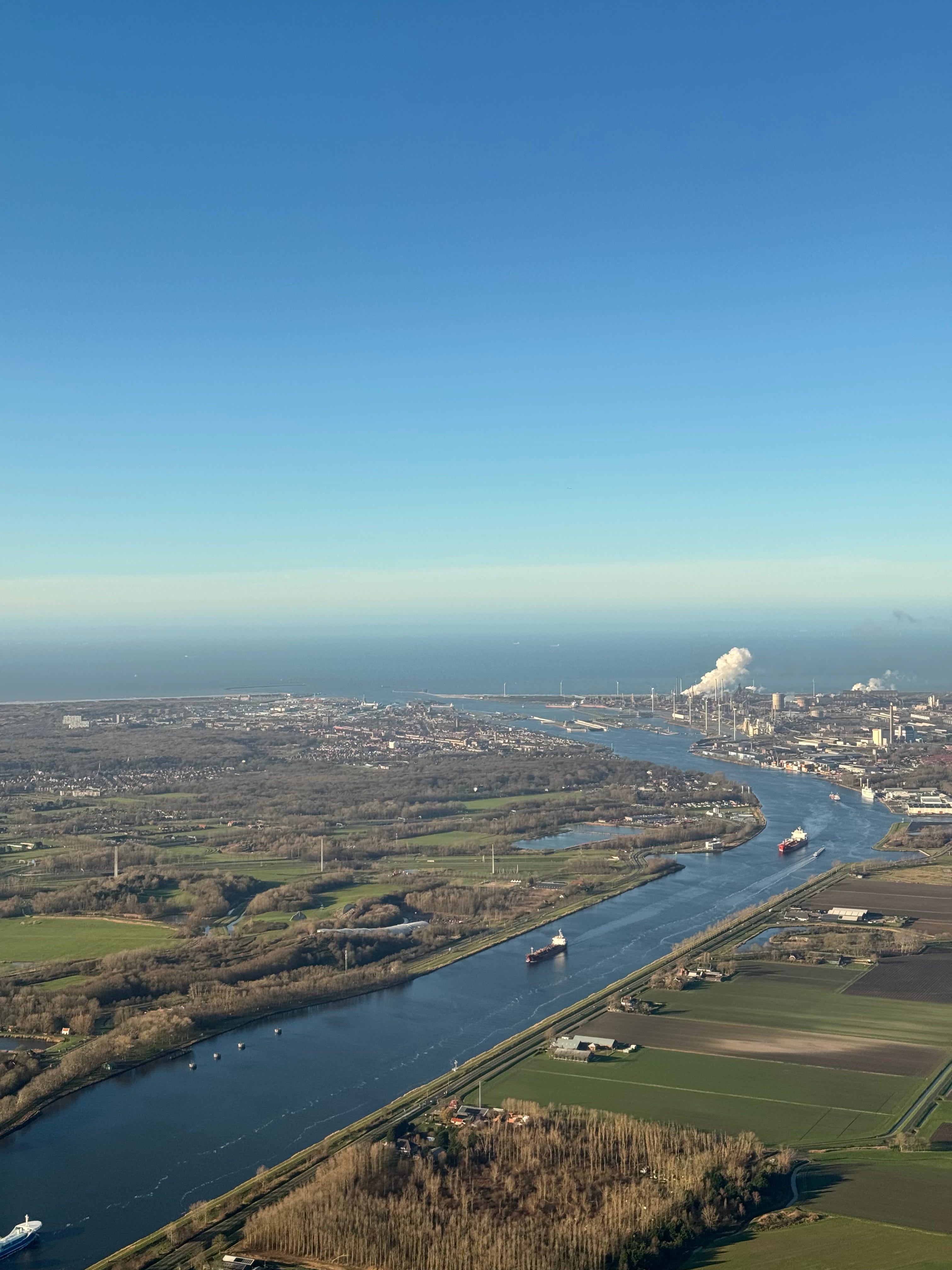
The photo above shows a branch of the Rhine entering the Ocean, visible out my window as we landed in Amsterdam on our return flight. We’re back in snowy Michigan now and happy to be home. But the memories of our European Christmas Market Tour are still resonating.
Basel deserves several days on its own, even without the Christmas Markets. There are many museums, but I had time only for one, the Kunstmuseum, “Kunst” means “Art” in German. The Basel Kunstmuseum is considered to be the most important art museum in Switzerland, housing the oldest public art collection in the world.
I spent a lovely afternoon wandering through the exhibit halls, practically alone, enjoying a wonderfully curated selection of art that traced the evolution and growth from the Renaissance to the present. Here are a few of my favorites:
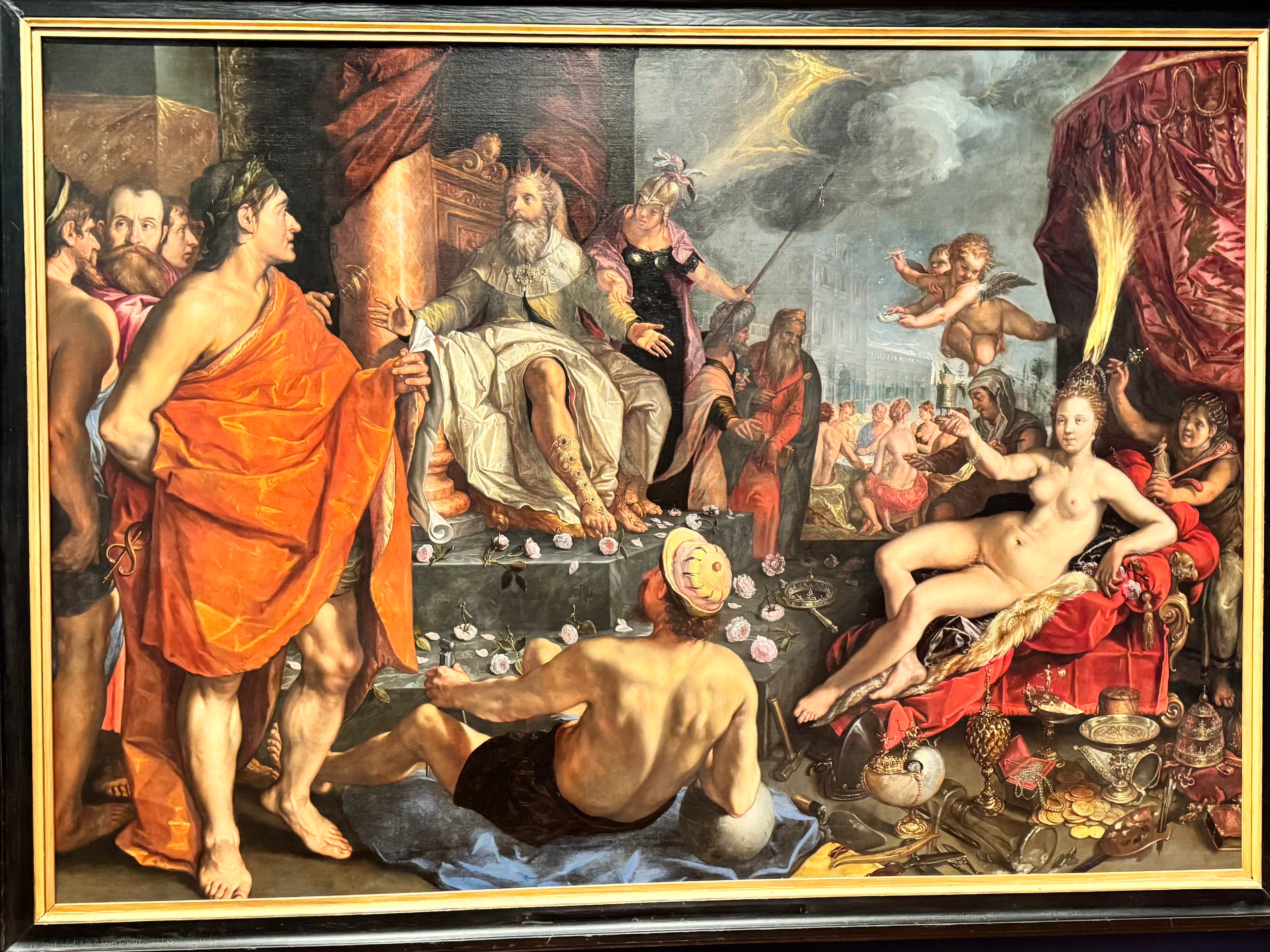
“Hermes presenting Pandora to King Epimetheus,” 1611, Hendrick Goltzius (1558-1617).
The long bright yellow feathers of Pandora’s headdress rise like a flame, her beauty and beguiling smile hiding what we know to be troubles to come.
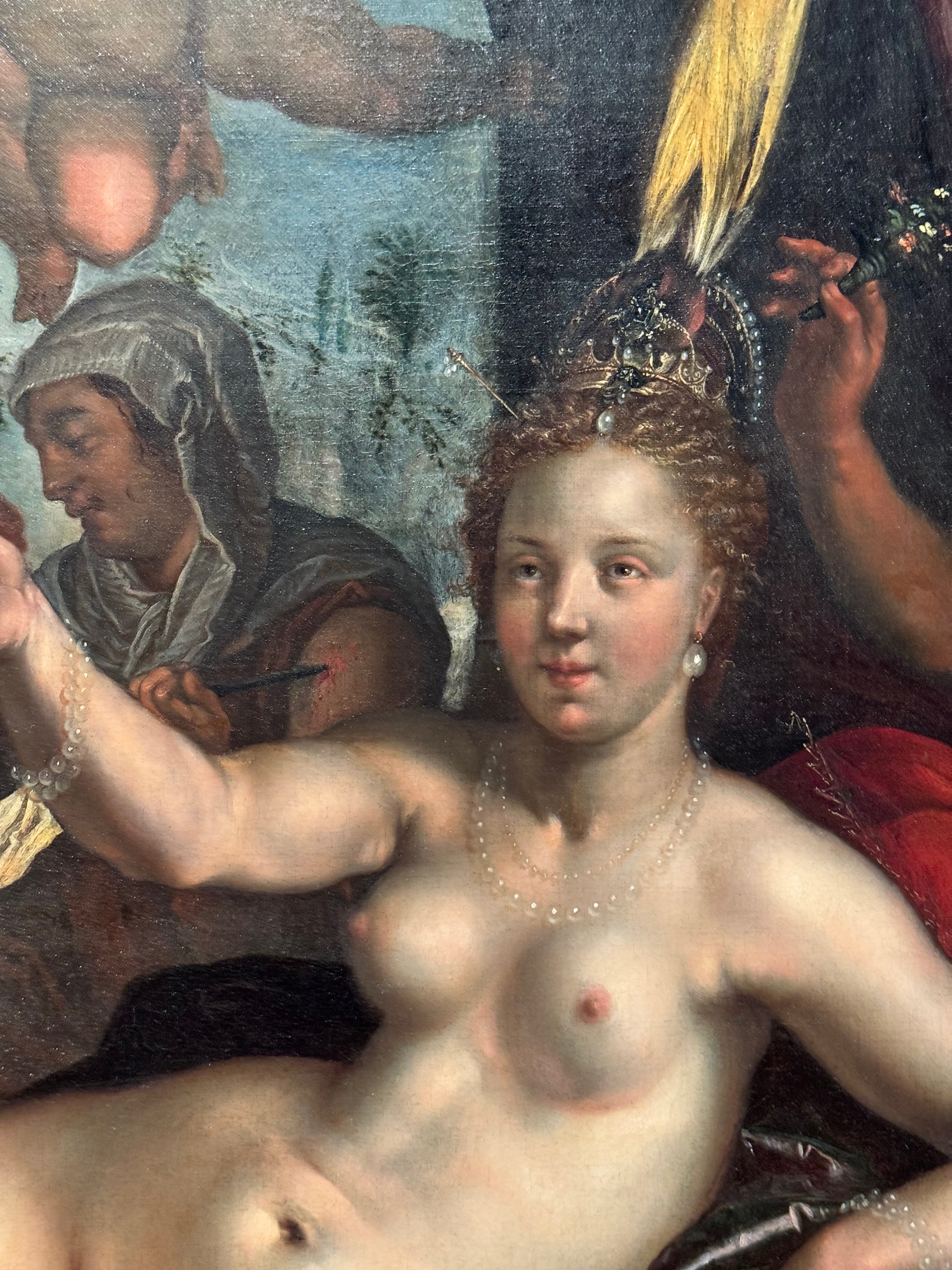
Her box may have already been opened, the ground strewn with flowers, coins, jewels, and tools.
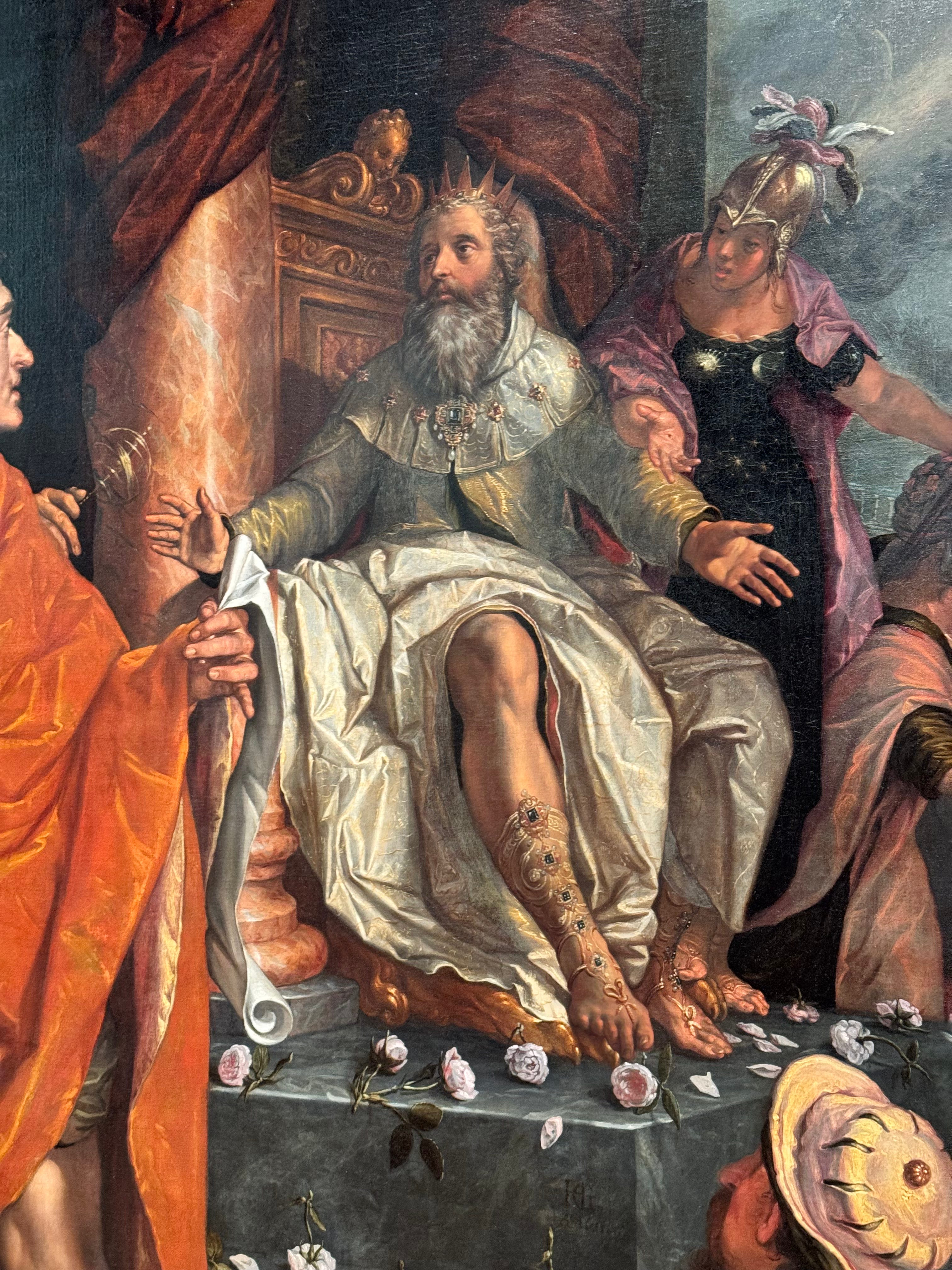
King Epimetheus implores Hermes with opens his hands as if to say, “What do I do now?” Epimetheus was the brother of Prometheus. He was charged with distributing traits to all the animals. When he came to humans, lacking foresight, he could find no traits left for man.
In the context of Plato’s dialogue, “Epimetheus, the being in whom thought follows production, represents nature in the sense of materialism, according to which thought comes later than thoughtless bodies and their thoughtless motions.” Leo Strauss, Natural Right and History, p. 117.
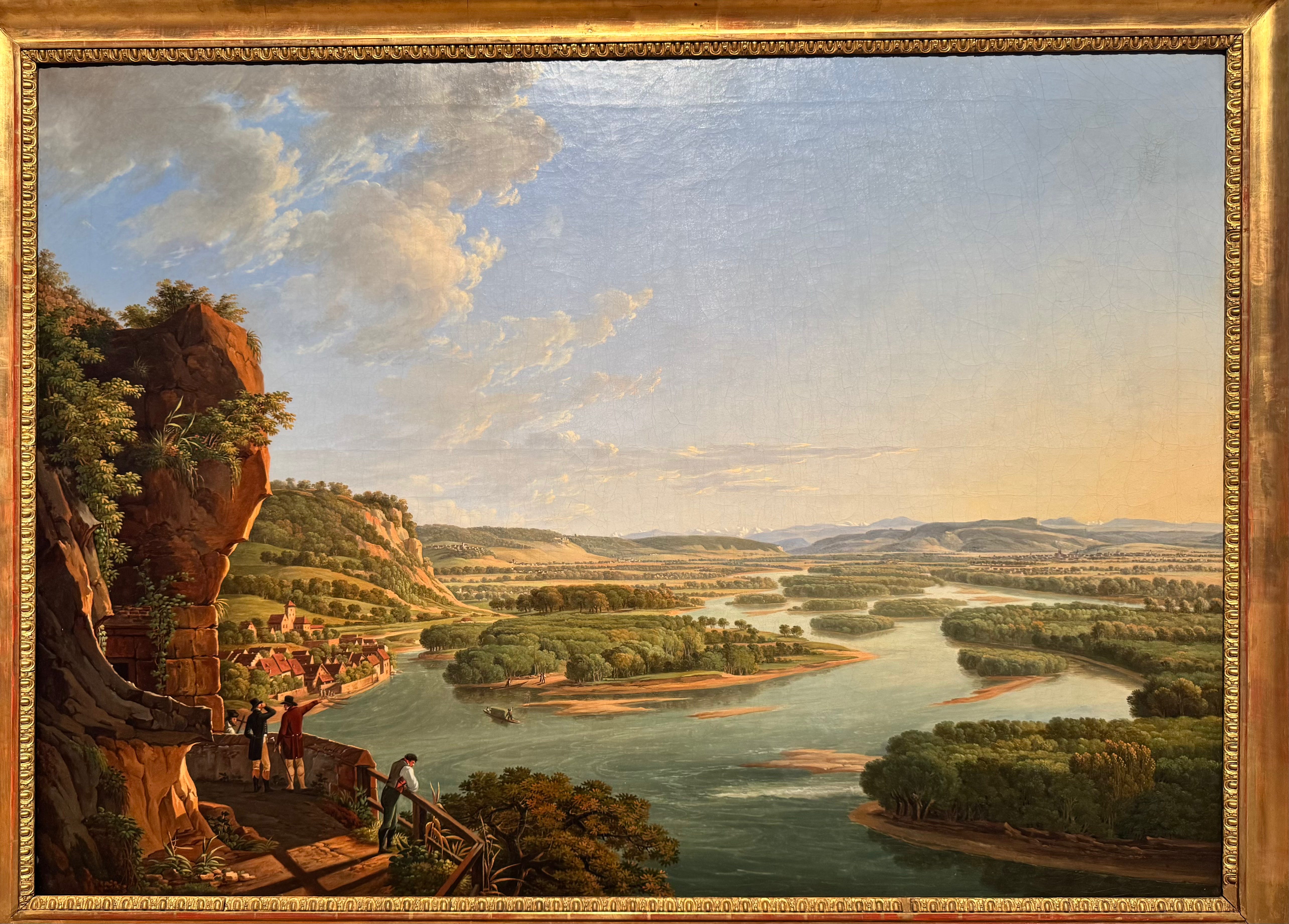
The Rhine is well-tamed today, with locks and bridges except for the stretch near the Lorelei. But it wasn’t always this way.
This 1819 painting, titled “View from the Steiner Klots up the Rhine towards Basel” by Peter Birman (1758 - 1844) captures the romantic views that captivated visitors two centuries ago, before the dams, railroads, locks and channelization sought to tame the spirit of the mighty river.
It reminded me of the wild rivers of the American West.
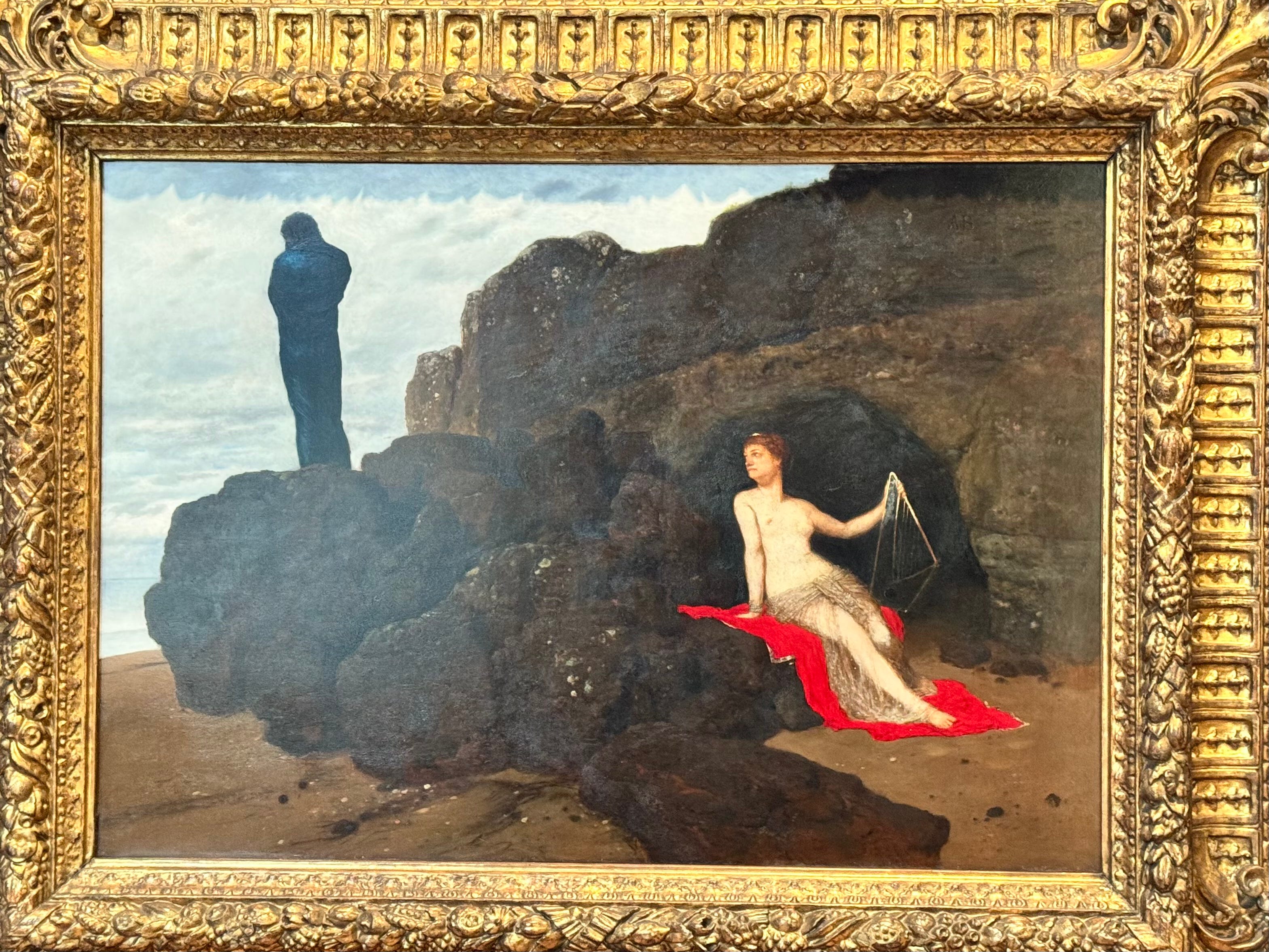
“Odysseus and Calyspo,” 1882 by Arnold Böcklin (1827-1901) shows a brooding Ulysses, his back to the enchantress, looking off in the distance.
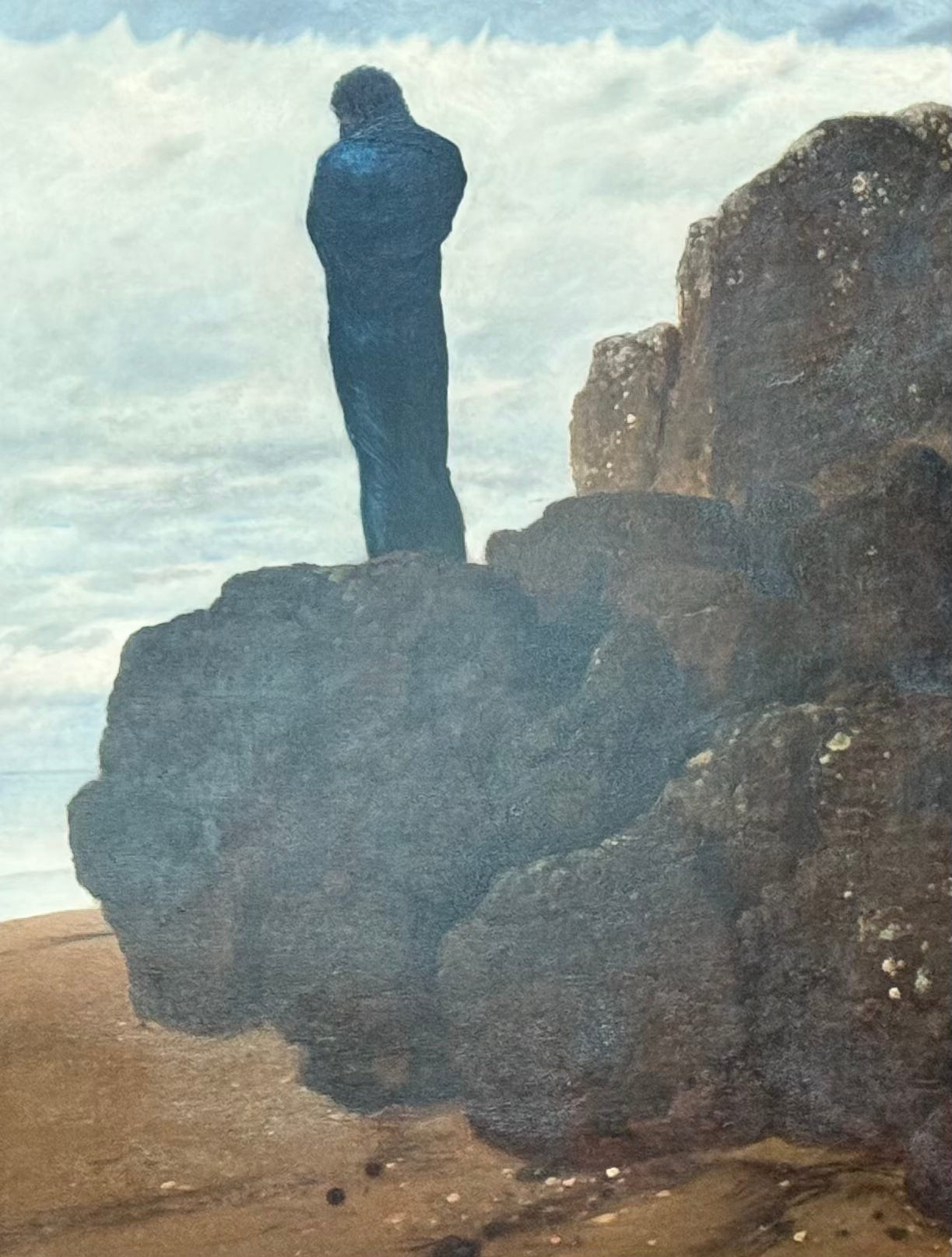
Is he planning his escape? Thinking of his fair wife at home? Ulysses seems to personify the shadow self described by Carl Jung, our dark side that we keep hidden away, rising from the brain-like rock, yet still rooted to it.
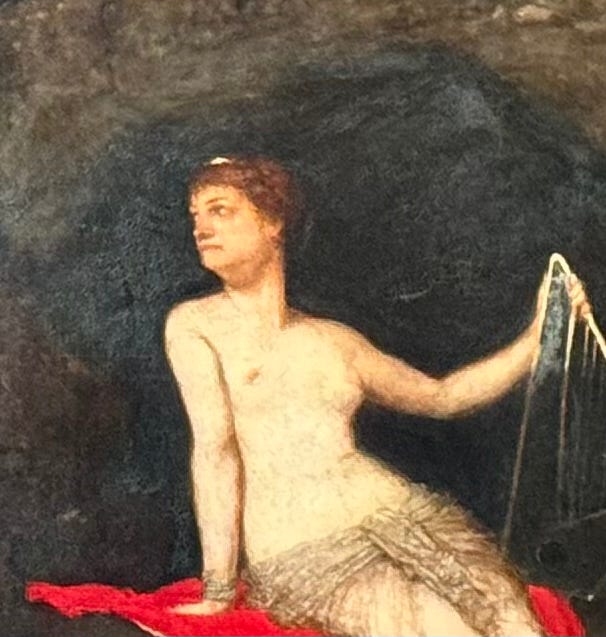
Calypso is concerned that her captive may be plotting an escape from her charms. Is she lust, inside our psyche, pulling us away from thought into the depths of pure pleasure?
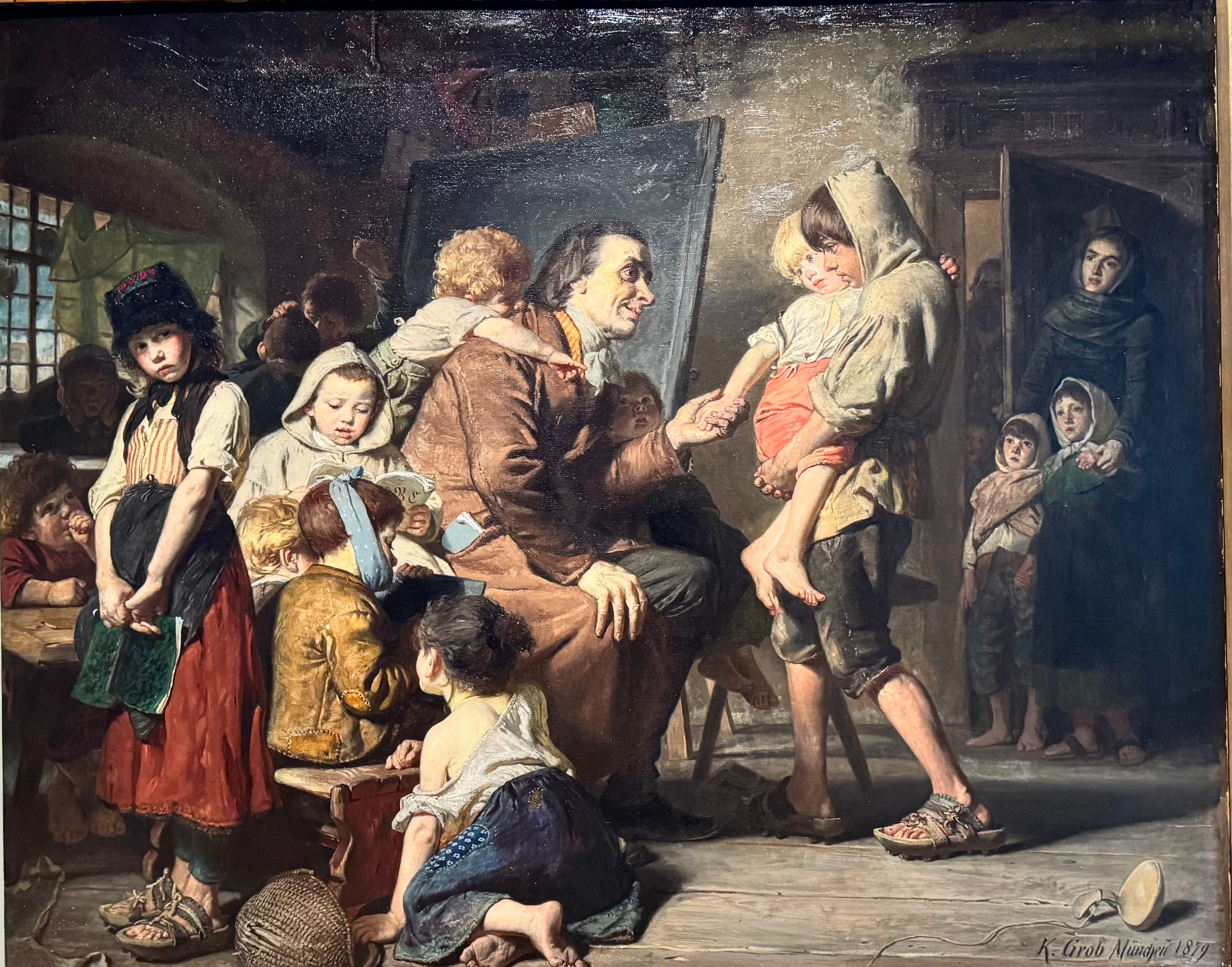
“Pestalozzi with the Orphans of Stan,” 1879, by Konrad Grob (1828-1904). I wasn’t familiar with this painting or the artist and had to look up the details. It’s a great story.
Johann Heinrich Pestalozzi (1746-1827) was a Swiss reformer and educator whose motto was “Learning by head, hand and heart.” Due to his efforts illiteracy in Switzerland was almost universally erased by 1830. He founded schools in both German- and French-speaking regions of Switzerland and authored many works on his revolutionary educational methods.
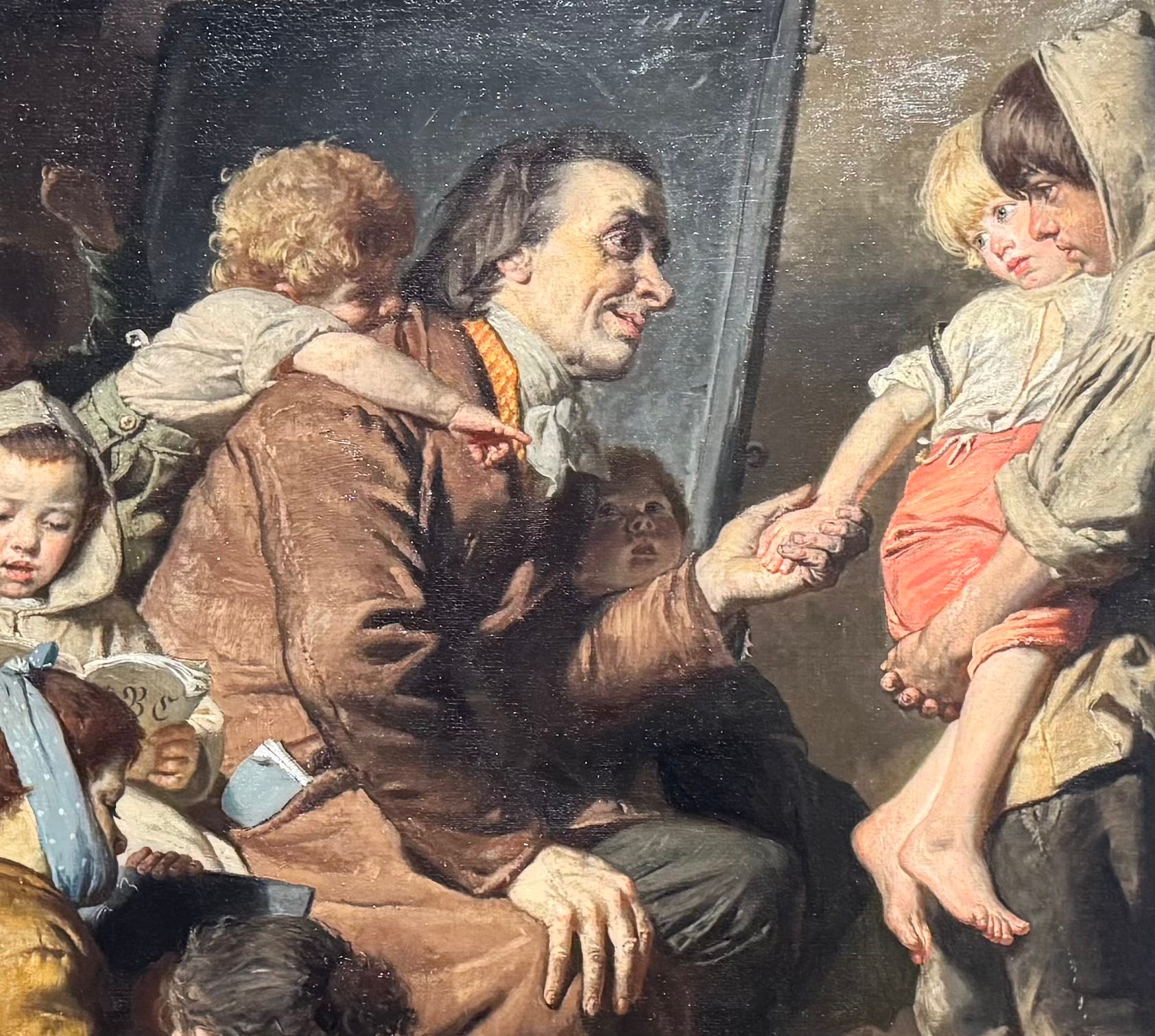
There is no mistaking the love in the eyes of Pestalozzi and the love back in return from the orphans.
The patches on the clothing, the new group of kids at the door, the little one learning to read, all capture the scene so well.
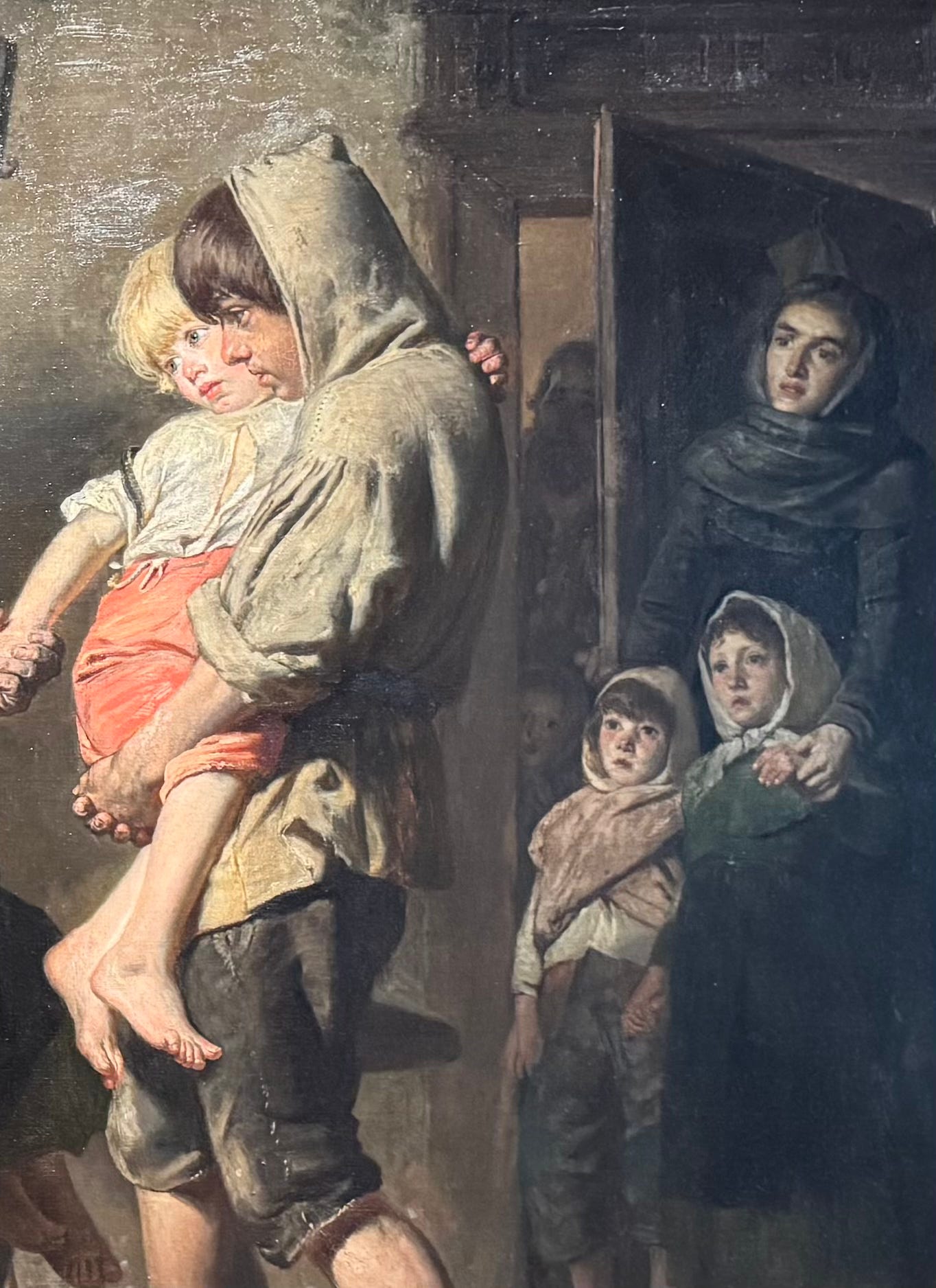
“Is there room here for us?” the older sister seems to ask as she ushers in her younger siblings, hoping to escape the darkness of ignorance.
I wasn’t familiar with Ferdinand Hodler (1853 - 1918) either.
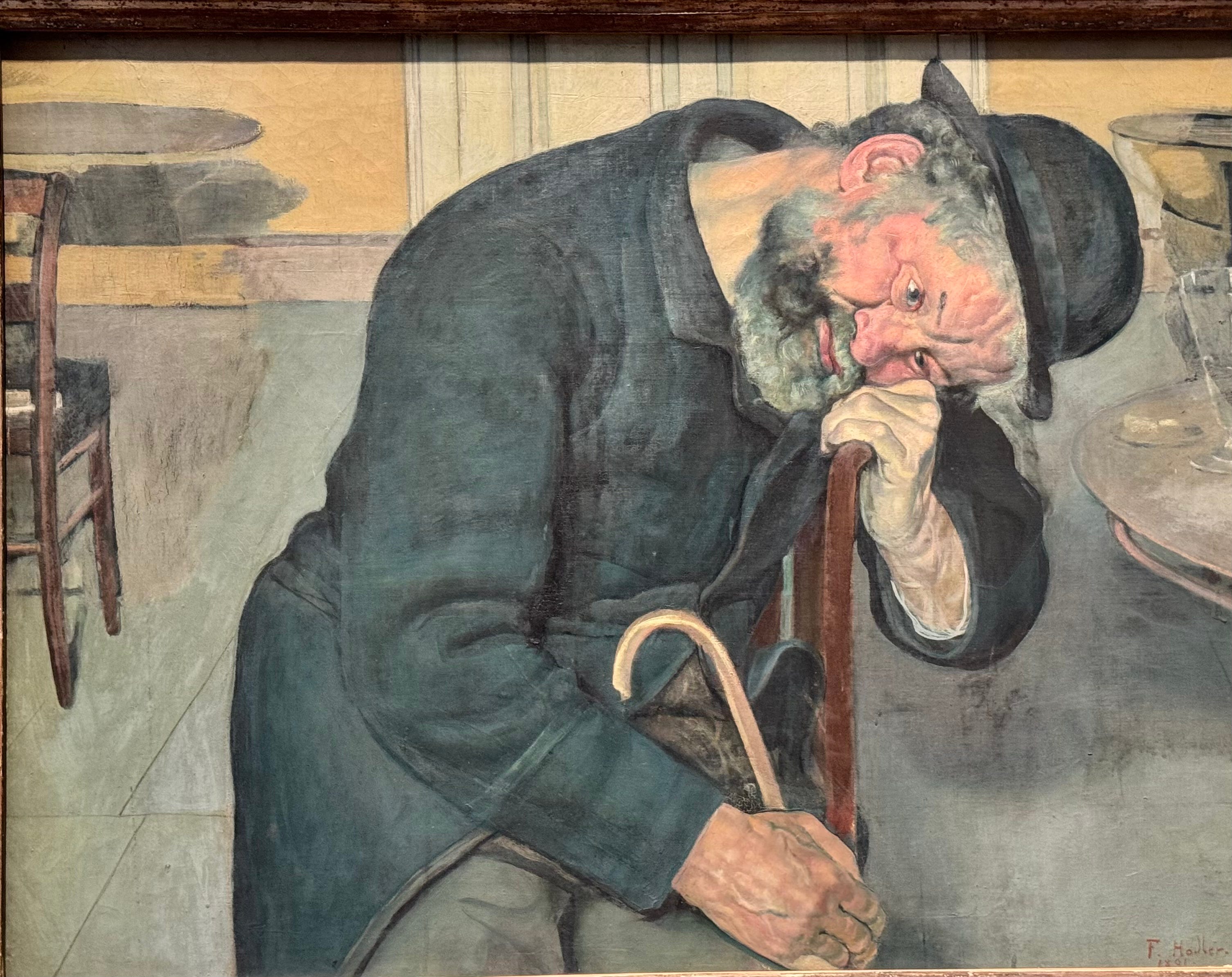
Hodler is considered one of the best Swiss painters of the nineteenth century. “Disappointed Soul,” 1890 depicts a man draped over the back of the chair, seemingly collapsed by the weight of the world.
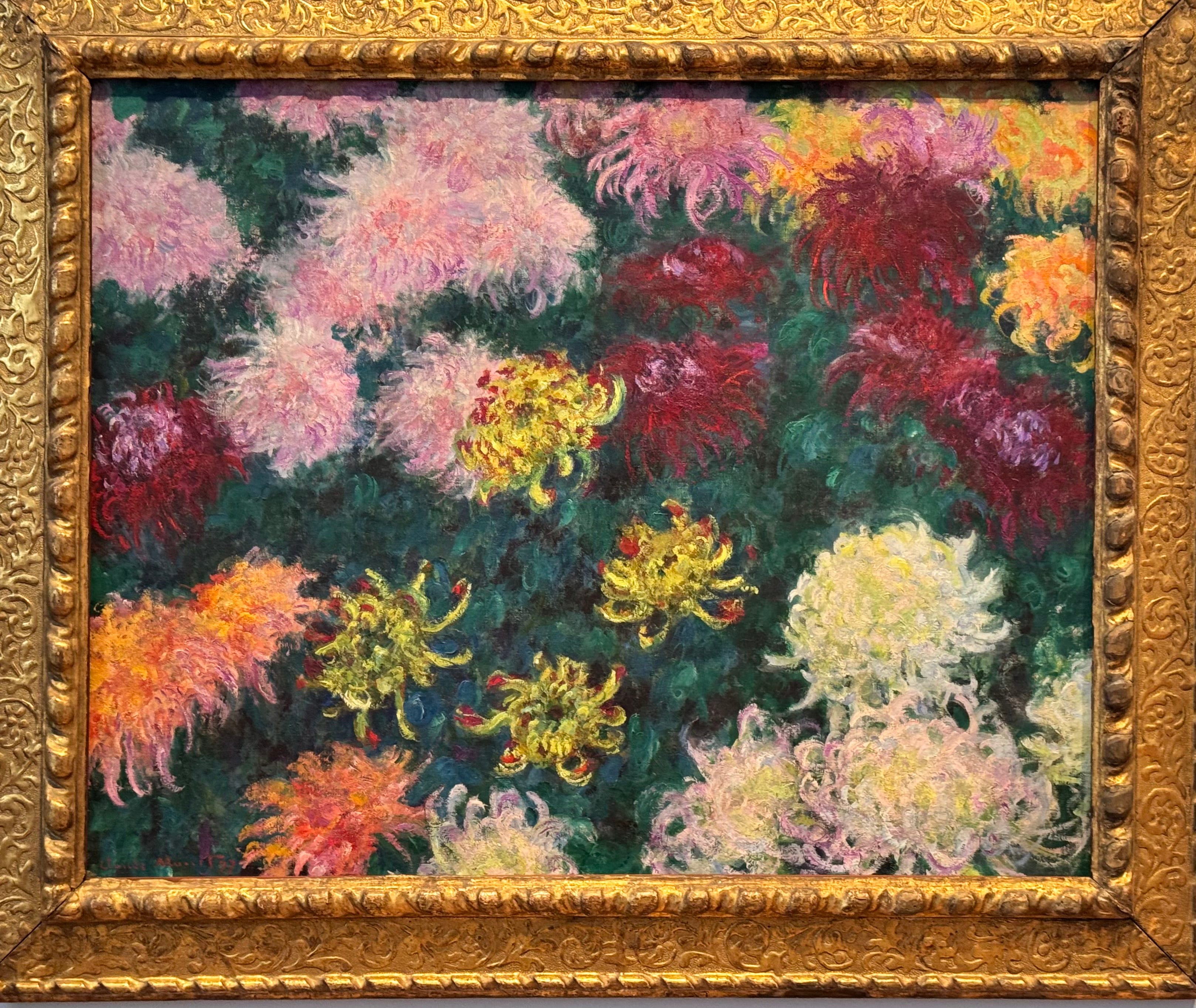
Then of course there were some wonderful works by Claude Monet (1840-1926), including “Bed of Chrysantemums,” and a later work “Footbridge over the water-lily pond,” 1919, (not shown) that drew me back to his Gardens at Giverny.
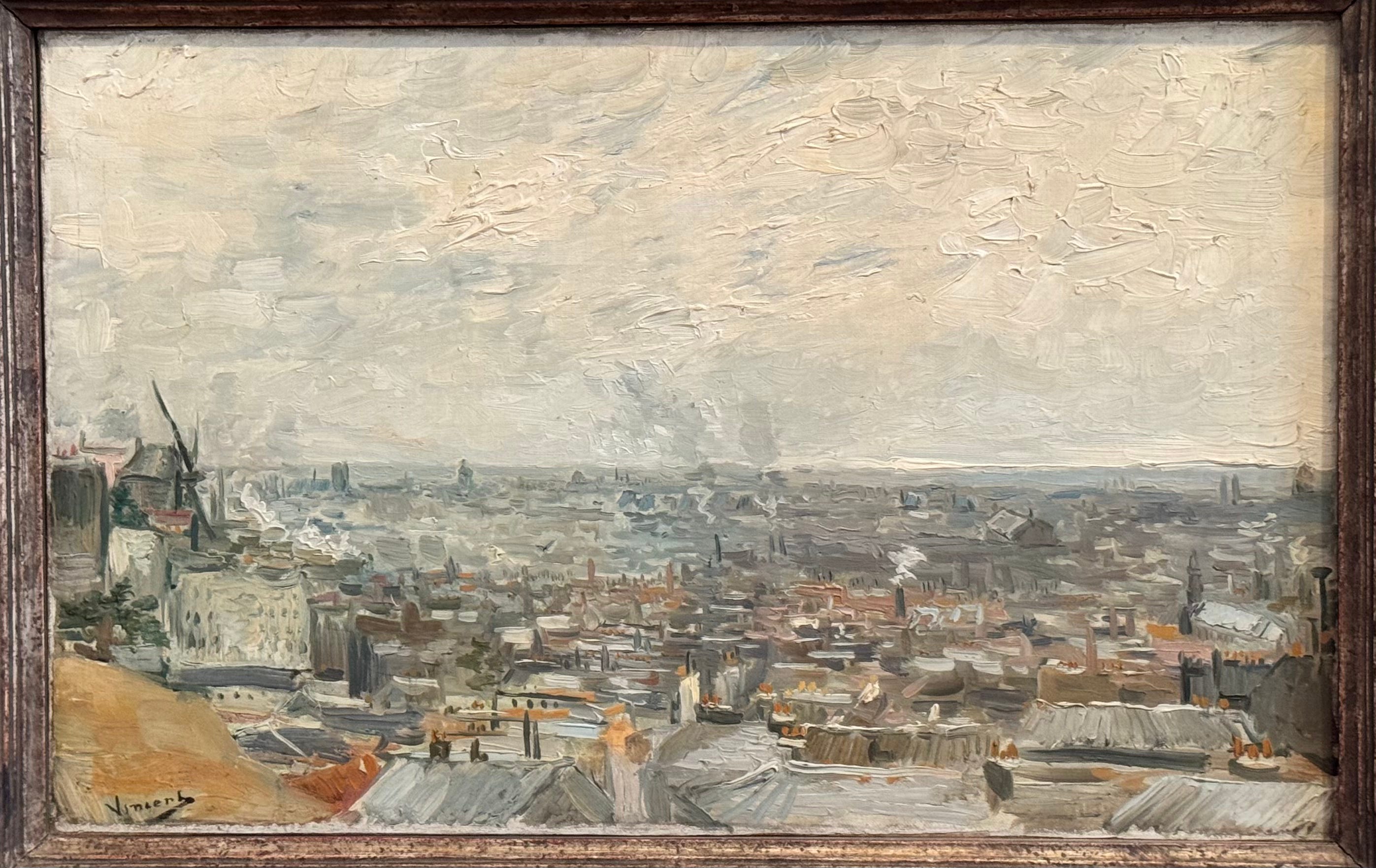
This Van Gogh (1853-1890) was new to me: “View on Paris from Montemarte,” 1886.
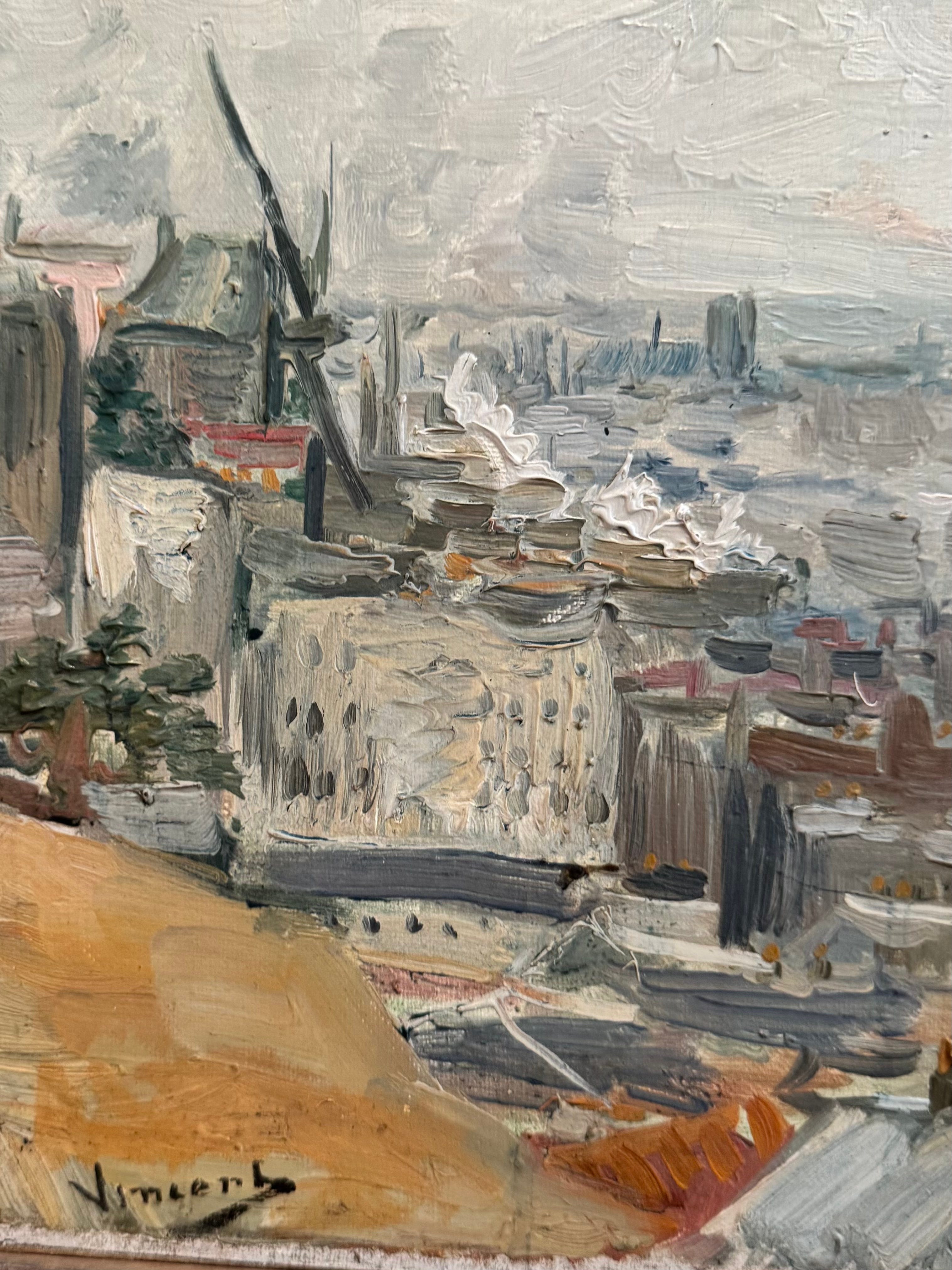
The madness of the sunflowers is not apparent, but a gloomy depression permeates the scene. It’s no wonder Vincent headed south for the brighter skies and sun of Provence. I wondered if perhaps the light of southern France was just too much for poor Vincent, who grew up in the darker climate of the Netherlands. But I could still feel the pain and unresolved energy.
Luckily for you the battery died on my phone at this point of my visit! It was just as well. Modern art takes thought as we plumb the depths of our souls to find the thread of connection between the art, the artist, and ourselves. And the empty galleries let me do just that.
Without my phone I felt free, no longer trying to capture the perfect photo, but instead just steeping myself in the rich brew of art.
Marc Chagall’s “Falling Angel,” Kandinsky’s “Improvisation,” Franz Marc’s “Animal Destinies,” and Pablo Picasso’s “The Couple” all spoke to me.
And I was particularly taken by three works of Max Ernst: “Father Rhine,” “The Great Forest,” and “The Wheel of the Sun.”
It was very pleasant afternoon in this civilized city, where everything runs like the machines in the brilliant fountain built by Jean Tinguely (1925-1991). I need to go back if for no other reason than to visit his museum, full of kinetic art works. Tinguely is considered one of the greatest and most innovative Swiss artists of the 20th century. He famously said:
“All that is fixed decays - all that is movement endures.”
Basel is a beautiful highly civilized city. I hope to return someday, before I completely decay.

We have deep snow and cold here in Michigan, but blue skies. Can’t wait to share a snowy walk with you. Focusing on Movement!
Thanks so much for traveling along~!
Thank you for that Odysseus! Such an unusual representation. I didn't think this scene had been a topic before the preraphaelites.
What a wonderful post to wake up to on this cold dark morning with so many terrible things hanging over us! Thanks so much. I love wandering in nearly empty museums. Did you know that the National Gallery in DC has the only Da Vinci in the Western world? I find it much more appealing than the Mona Lisa and you can stand and look at it and its reverse side for as long as you like, with only the occasional fellow traveler.
And as for the rivers of Europe--so fascinating that they are basically all tamed today. Makes for good river cruises and lots less flooding, but so fascinating to think of what they used to be like. I read a book a while ago called The Seine: The River that Made Paris by Elaine Sciolino. Didn't love it but very interesting in making you think of how rivers made the places we love to visit.
Thanks for your post!