

What is a River?
Reflecting on the Flow

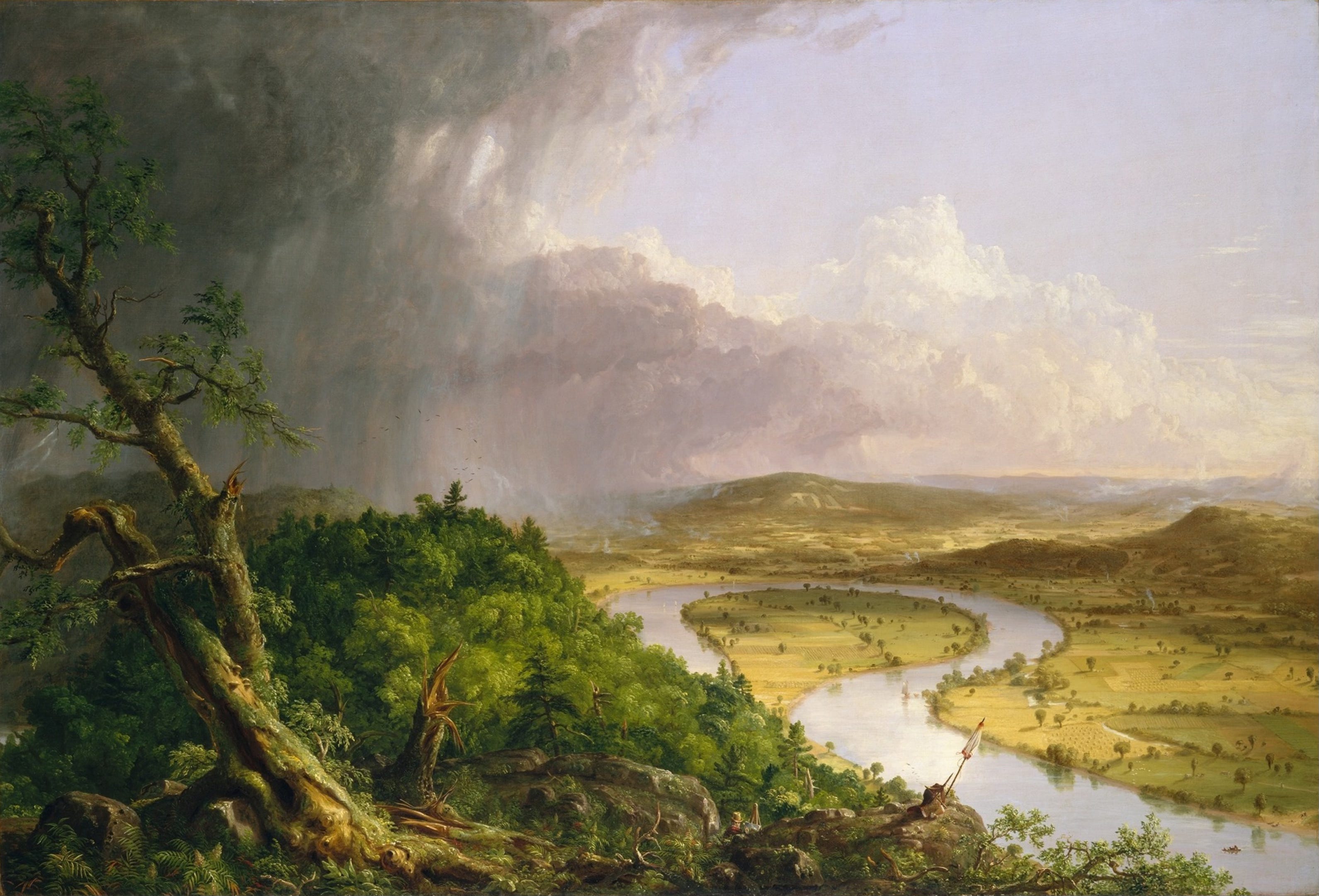
The Oxbow, by Cole Thomas, depicting the Connecticut River near Northampton (1836). Public Domain.
Our flight takes off this evening for Amsterdam, where we’ll spend a few days (Concertgebouw and a museum or two) then board a river boat and head up the Rhine River to check out some Christmas Markets. So I’ve got rivers on my mind.
A river can be many things to many people. Even the same river can have many meanings and many images.
At its most basic, of course, a river is flowing water. But a river can also be a metaphor.
Rivers as a metaphors
Metaphoric rivers abound. Rivers of blood, rivers of time, rivers of justice.
“Let justice run down like water, and righteousness like a mighty stream.” Amos 5:24 New King James Version.
Rivers can be a metaphor for change.
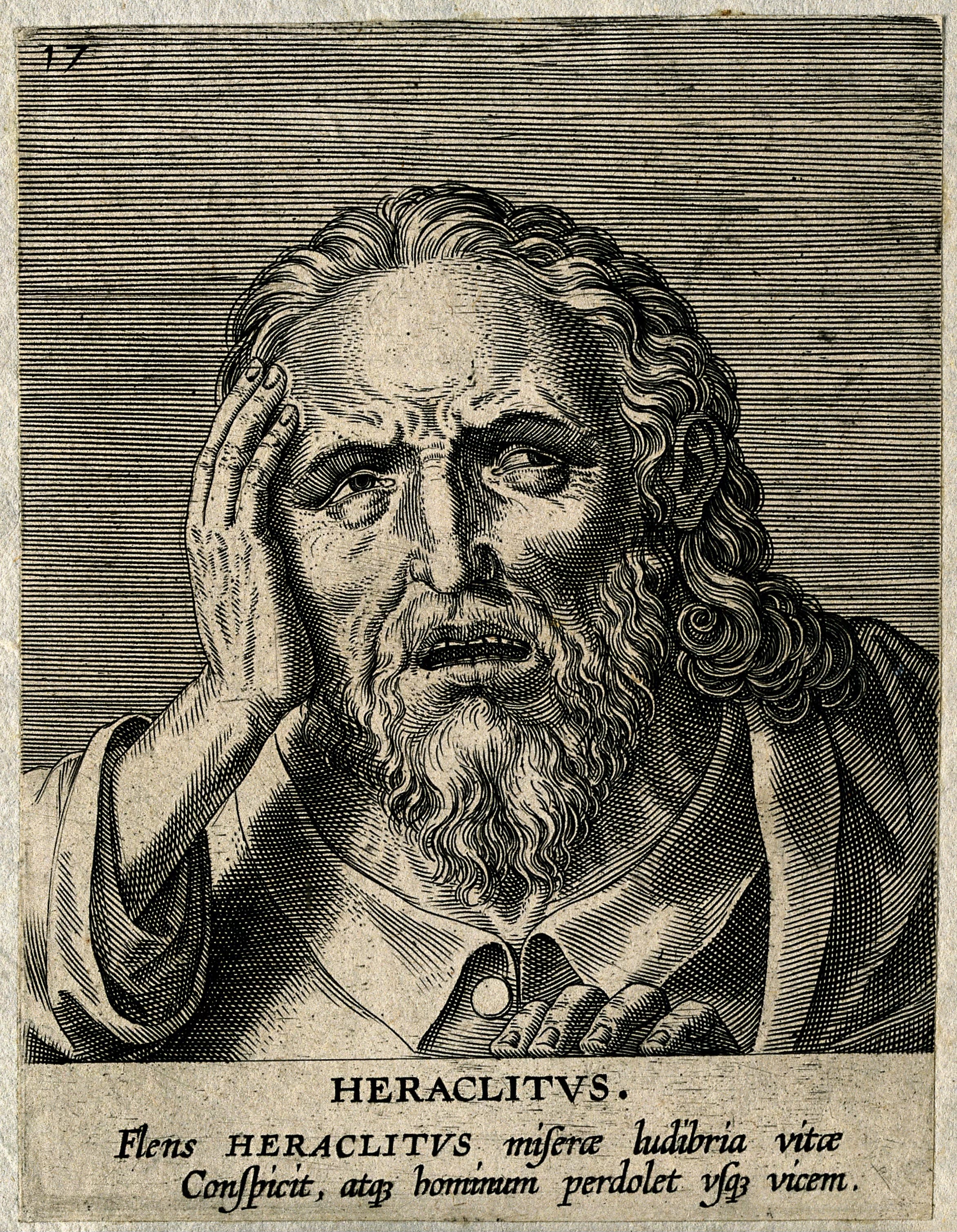
Heraclitus (pre-Socratic philosopher, c. 500 BCE) shown above, CC, referred to rivers and streams as a metaphor for change:

“All things come into being by conflict of opposites, and the sum of things (τὰ ὅλα ta hola (’the whole’)) flows like a stream.”
“Everything flows.”
Heraclitus used the metaphor of a flowing river to illustrate his theory of flux. There are three different versions of his metaphor (we know his work only through others):
“On those who step into the same rivers, different waters flow.”
“We both step and do not step into the same river. We both are and are not.”
“It is not possible to step into the same river twice.”
Ludwig Wittgenstein (1889-1951) thought that one could step into the same river twice, but the river bed itself might shift:
“The mythology may change back into a state of flux, the river-bed of thoughts may shift. But I distinguish between movement of the waters on the river-bed and the shift of the bed itself; though there is not a sharp division of the one from the other… And the bank of that river consists partly of hard rock, subject to no alteration or only to an imperceptible one, partly of sand, which now in one place now in another gets washed away, or deposited.”
Ludwig Wittgenstein (On Certainty, 97, 99).
I’ll go with Heraclitus on this one, though I like Wittgenstein. If the river-bed itself can shift, the water is also moving, changing, evolving, as well as its bed.
Rivers can be a place of baptism and transformation. In the first chapter of Mark, Christ insists John baptize him in the Jordan River. Here water served as a symbol of cleansing away sin, leading to rebirth and salvation.
One of my ancestors, Wilhelm Knepper, was baptized in the River Wupper, a Rhine tributary, in 1714, He ended up in prison because of it, as I explained in Chapter 9 of 400 Years in America: Wilhelm Knepper He was transformed by the experience, eventually immigrating to Penn’s Woods, where religious outcasts from the Rhineland were welcome.
One of my favorite authors, Joseph Conrad, uses the winding Congo River to mirror Marlow’s voyage into primal fear and moral ambiguity as he journeys into the heart of Africa and the human Heart of Darkness.
Mark Twain uses Huck Finn’s trip down the Mississippi to symbolize Huck and Jim’s search for freedom and the lurking dangers of “civilization.”
Functions of Rivers
Rivers are a source of life, providing drinking water and irrigation for food.
Rivers are a source of energy, generating hydro power.
Rivers are highways, and have been since the first Neanderthals floated a log to cross a stream. Neanderthals are named after the Neander Valley - formed by the Düssel, a Rhine tributary - where their bones were first discovered. So our species weren’t the first hominids to travel this route!
Rivers are a reflection. A mirror of ourselves, our world and our past.
Rivers are threads that embroider our world, like strings of silver stitching us together.
Rivers are a connection to the past, lined with markers of those who came before us.
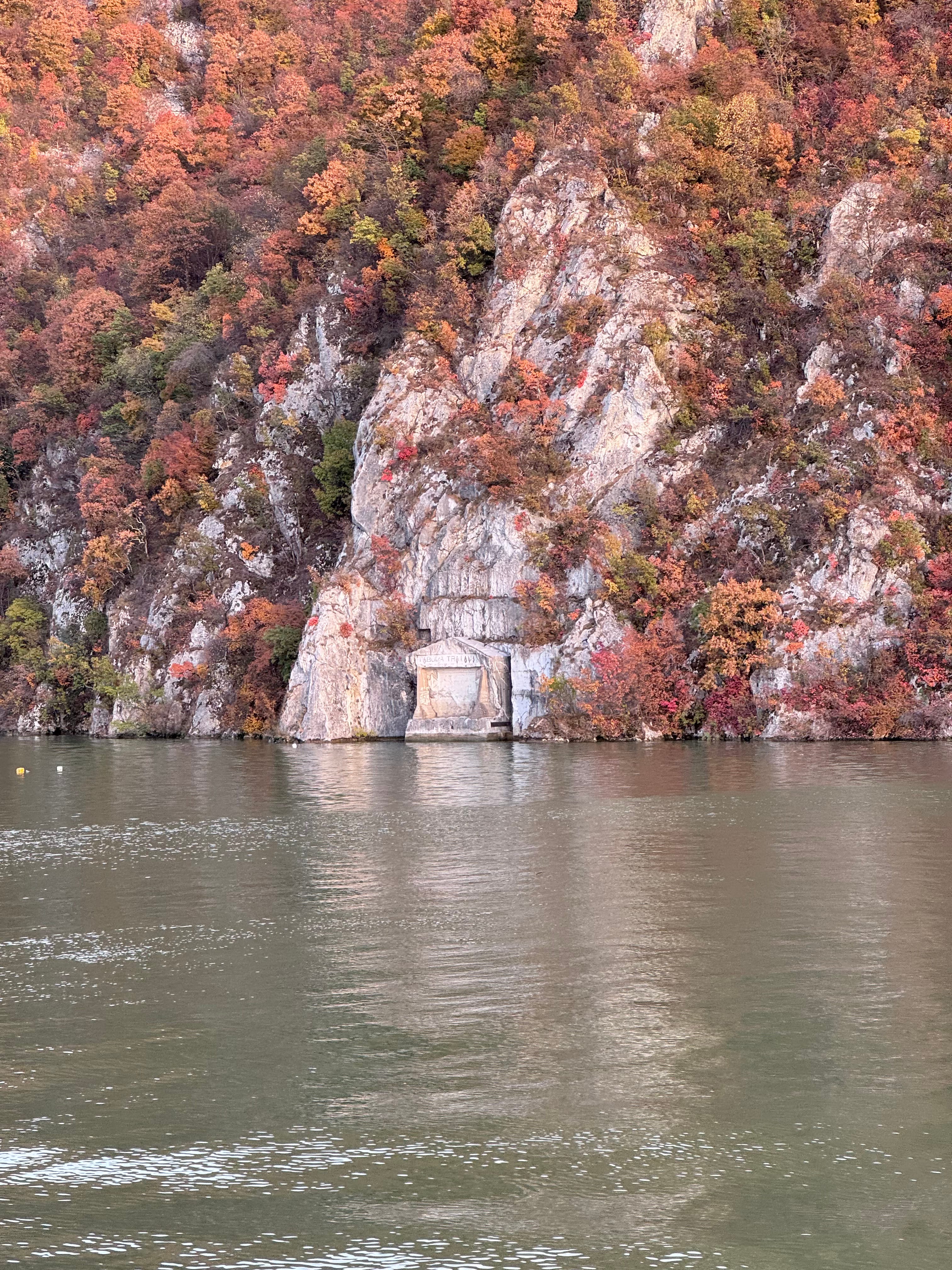
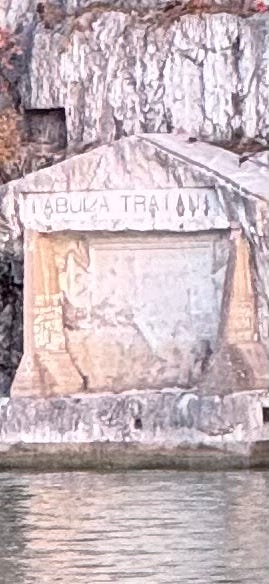
Above: Tabula Trajan, c. 90 CE, on the Danube, commemorating the construction of a Roman Road along the south bank. See my post from last autumn: Golubac Fortress: Guardian of the Iron Gates.
Rivers can be a barrier. The Rhine served as an important line of defense throughout history. The Rhine was the northern border of the Roman Empire, and, most recently, defended by the Nazis as the Allies attempted to cross into Germany and end WWII. See, e.g. Operation Market Garden and the Battle of Remagen. I hope to cover these two battles in a future post.
Rivers can be a journey. This is one of my favorite Robert Louis Stevenson poems, from A Child’s Garden of Verses:
Where Go the Boats?
Dark brown is the river.
Golden is the sand.
It flows along for ever,
With trees on either hand.
Green leaves a-floating,
Castles of the foam,
Boats of mine a-boating—
Where will all come home?
On goes the river
And out past the mill,
Away down the valley,
Away down the hill.
Away down the river,
A hundred miles or more,
Other little children
Shall bring my boats ashore.
Rivers can be a home. I’ll have my eye out for the various tug boats that push and pull barges up and down the Rhine. Most of them are Dutch. The Captain and often his whole family live aboard.
Rivers can be a highway. The Rhine is one of the busiest commercial rivers on Earth.
Rivers can be a source of food. Fish, clams, wild rice, and other protein can be found in a river, providing sustenance for many life forms, including humans.
Rivers are often a source of power. Long before the hydro plants we built mills to grind our grain and cut our wood.
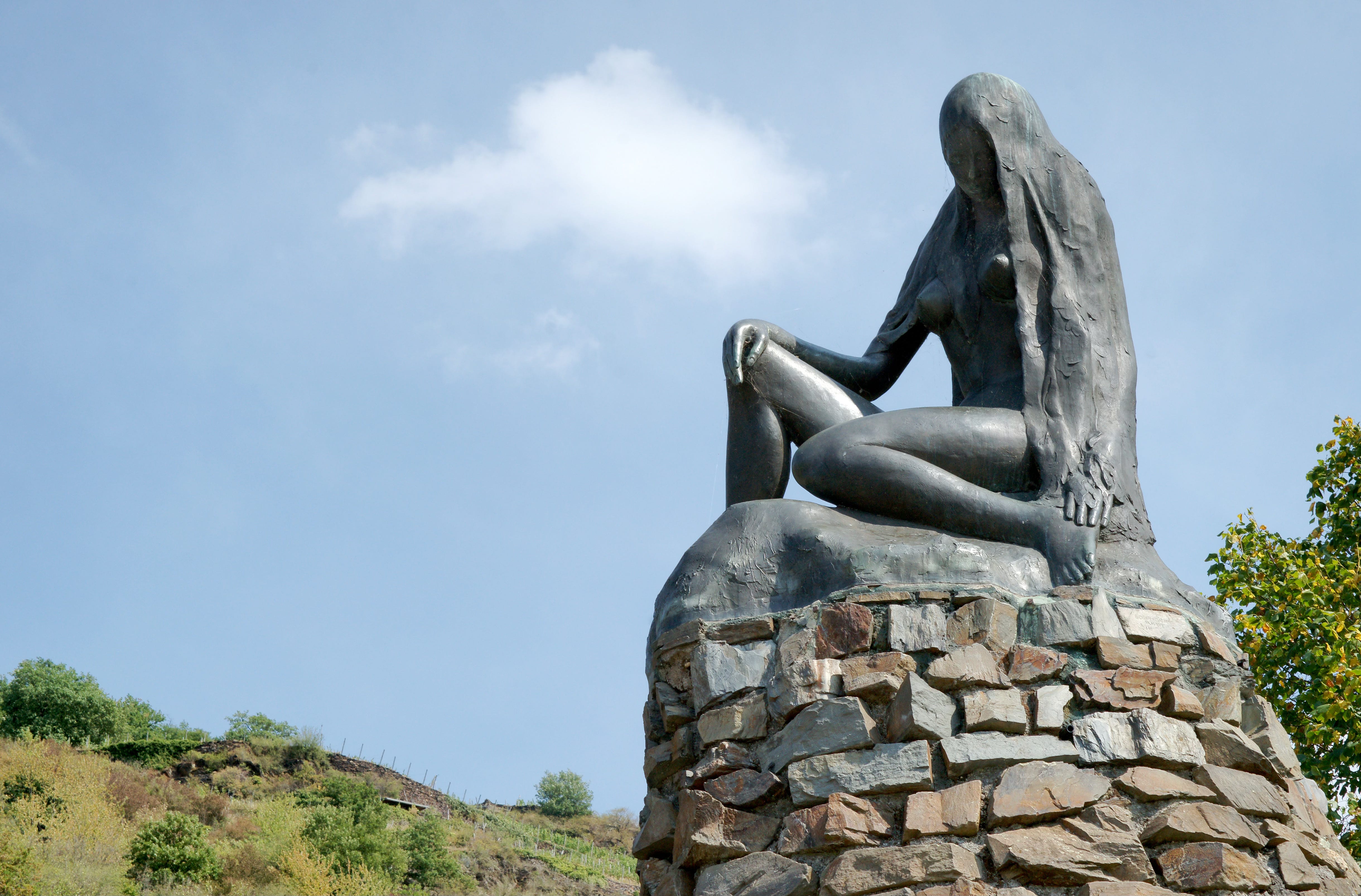
Rivers are an inspiration. We’ll pass the Lorelei, which inspired Clemens Brentano to compose Zu Bacharach am Rheine, a poem about the beautiful Lore Lay, who, betrayed by her sweetheart, bewitches men to sail to their doom on the Lorelei rock. The Lorelei is the most famous female figure in the Upper Middle Rhine Valley. Cast in bronze, she sits at the foot of the rock. Designed by the sculptor Natascha Alexandrova Princess Jusopov in 1983. CC.

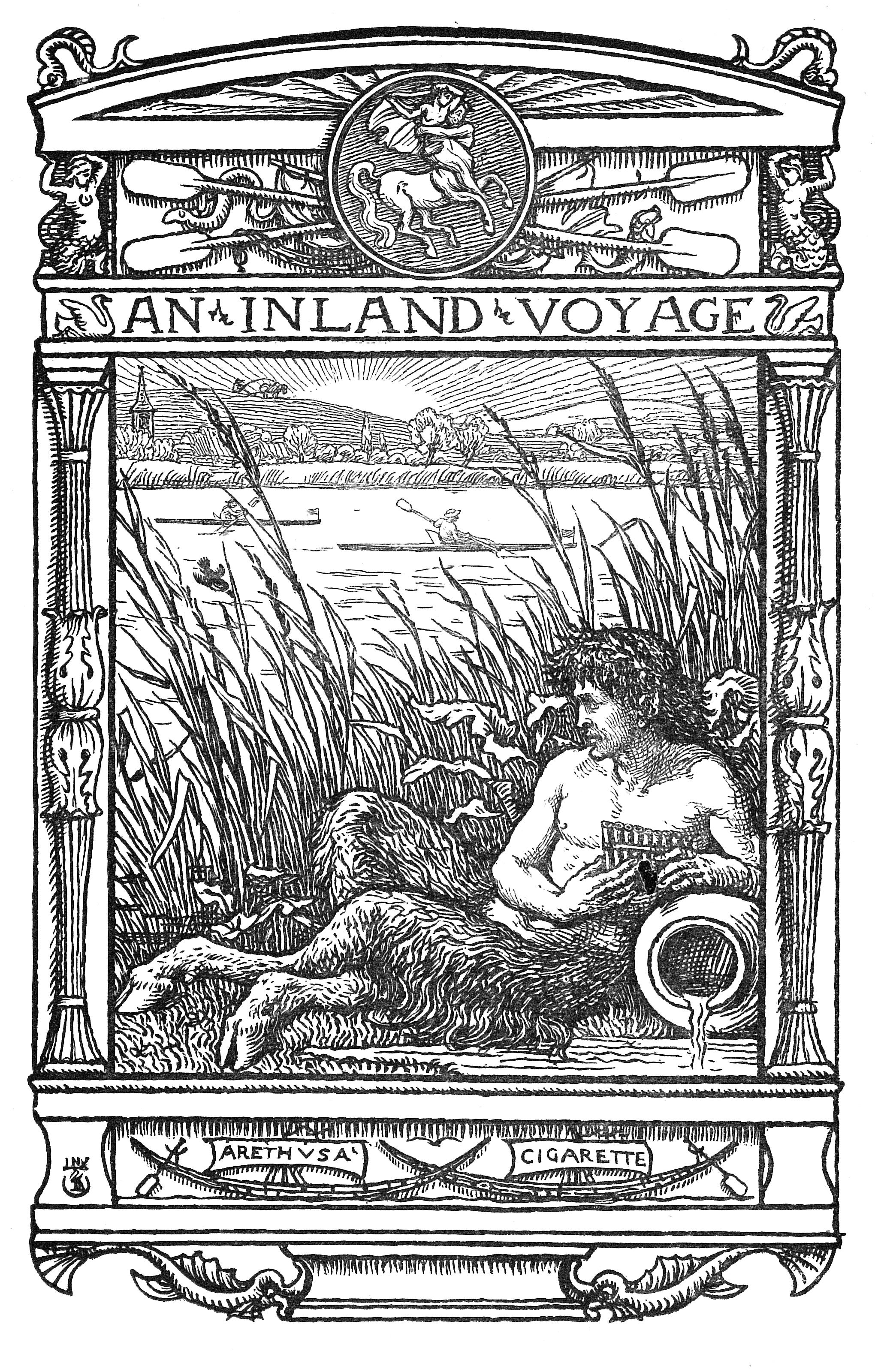
Robert Louis Stevenson was inspired to write An Inland Voyage, 1888, about a canoe trip on the Oise River in Belgium and France with a friend. Their canoes were named the “Arethusa” and “Cigarette,” shown on the original frontispiece above.
Rivers can be sound. The roar of a waterfall or the ripple of a brook.

Above: The Rhine Falls, Switzerland, the most powerful waterfalls in Europe. We won’t be going this far up the Rhine. CC

Rivers can be a smell. Some river smells may be better than others. I will keep my nose out for smells!
Rivers are a depth, changing with the course and current. Sometimes deep and slow, sometimes fast and shallow.
Rivers can be a hiding place. Thinking of Huck Finn and Jim hiding out on the Mississippi.
Rivers are an adventure!
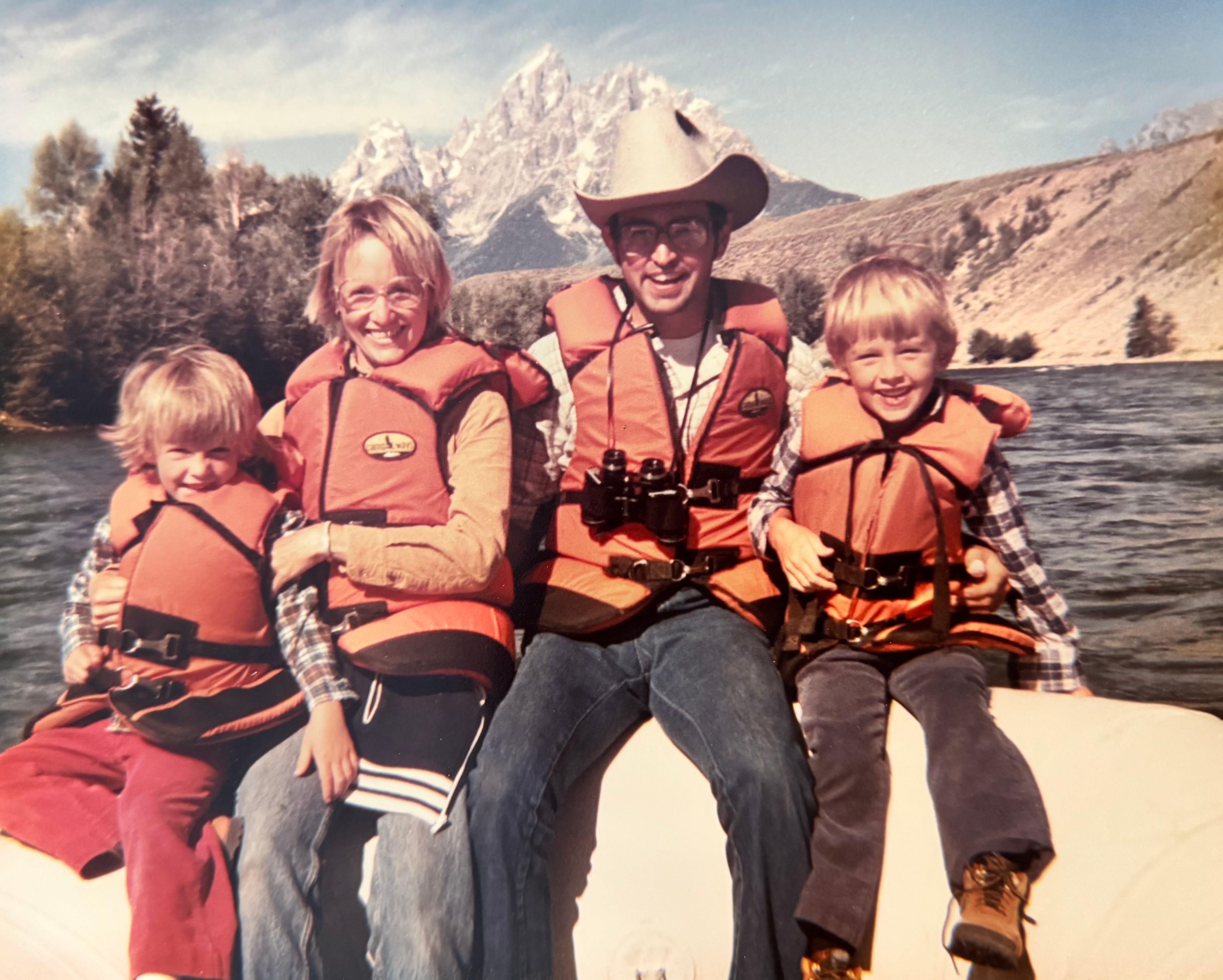
Above: Sarah, Myra, me and Ben on a raft trip down the Snake River, Wyoming, July 1984, near Yellowstone. Grand Tetons in the background. Photo taken with a Kodak Instamatic X-15. Those were the days!
But most of all, rivers are a flow. The flow of life.
Life
So they say
Is but a game and they’d let it slip away
Love
Like the autumn sun
Should be dyin’
But it’s only just begun
Like the twilight in the road up ahead
They don’t see just where we’re goin’
And all the secrets in the universe
Whisper in our ears
All the years will come and go
Take us up
Always up
We may never pass this way again
We may never pass this way again
We may never pass this way again
Dreams
So they say
Are for the fools and they let ‘em drift away
Peace
Like the silent dove
Should be flyin’
But it’s only just begun
Like Columbus in the olden days
We must gather all our courage
Sail our ships out on the open seas
Cast away our fears
And all the years will come and go
Take us up
Always up
We may never pass this way again
We may never pass this way again
We may never pass this way again
So
I wanna laugh while the laughin’ is easy
I wanna cry if makes it worthwhile
I may never pass this way again
That’s why I want it with you
‘Cause
You make me feel like I’m more than a friend
Like I’m the journey and you’re the journey’s end
I may never pass this way again
That’s why I want it with you
Baby
We may never pass this way again
We may never pass this way again
We may never pass this way again
We may never pass this way again
Seals and Croft - We May Never Pass This Way (Again), YouTube. Songwriters: Jimmy Seals / Darrell G. Crofts. © 1973 Sutjujo Music, Faizilu Publishing. Diamond Girl album.
I love rivers.
Thanks so much for traveling along.

Can't get that song "Time Flowing Like a River," by Alan Parsons Project out of my head, but it is beautiful - so that's fine! And I love rivers and river metaphors. Buen viaje to you both and look forward to your updates and photos. Enjoy!!
North of where I was raised in Arkansas is a town called Marked Tree, Arkansas. It is on the St. Francis river, and it got its name from when people used the river for transportation and trade. There was a big tree on the river that someone marked so you could portage across the land and hook back up with the river. Someone built a trading post, and it got bigger after that.